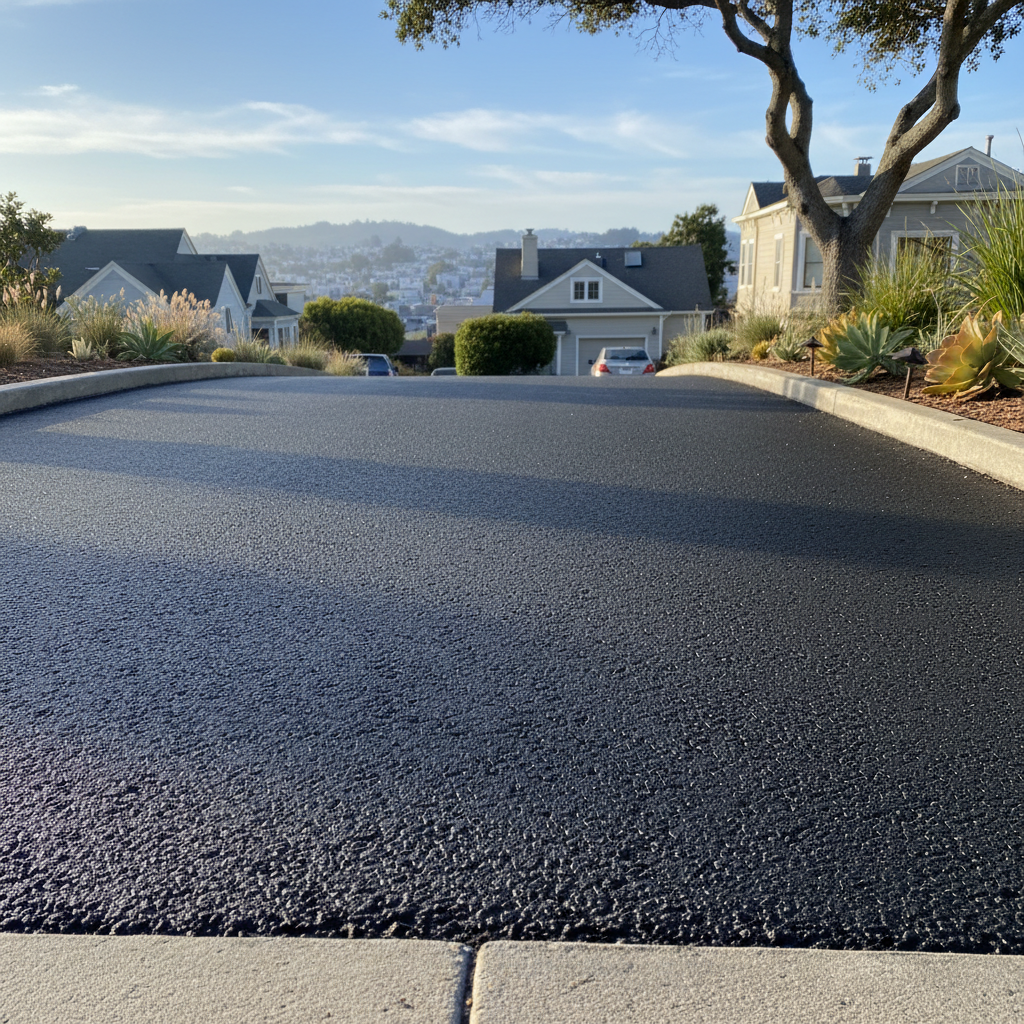
What's the real difference between asphalt and concrete for a residential driveway?
This question comes up all the time, and I totally get it. Folks see both and wonder which makes more sense for their San Francisco home. Look, they both have good points and bad, but for driveways, I usually lean towards asphalt, especially considering our soil conditions and how much the ground moves around here.
Asphalt, you see, is flexible. It's basically aggregate — think stone and sand — mixed with bitumen, which is a petroleum-based binder. Because it's flexible, it handles ground movement and temperature shifts way better than concrete. Concrete, on the other hand, is rigid; it just cracks when the ground shifts or if it's under too much stress. Remember those old, cracked concrete sidewalks in the Mission District? That's often from ground movement or even tree roots. Asphalt might get some small cracks over time, but those are usually easier and cheaper to fix than concrete, which often needs a whole new slab.
Installation? Asphalt is quicker. We can lay it down, compact it, and you're usually driving on it within a day or two. Concrete, though, needs a good week to cure before it can handle any real weight. And cost-wise, asphalt is generally less expensive upfront. So, if you're looking for something durable, flexible, and more budget-friendly that's also easier to maintain long-term, asphalt usually wins for residential driveways.
How long does a typical asphalt driveway last in San Francisco?
You're looking at a solid 15 to 20 years, sometimes even 25, if we install it correctly and you keep up with basic maintenance. That's a pretty good run for any home improvement, don't you think? But here's the big thing: "installed right" makes all the difference. Skimp on the base layer or ignore proper drainage, and you're just asking for trouble down the line. We've seen driveways in places like the Sunset District, where the ground can get really saturated, fail early because the subgrade wasn't prepped properly.
Maintenance plays a huge role too. Things like sealing it every few years, fixing small cracks as soon as they pop up, and keeping heavy vehicles off if it wasn't designed for them can really stretch its life. Think of it like your car – you wouldn't expect it to last without regular oil changes, right? Same goes for your driveway.
What's the deal with drainage? How important is it for my asphalt?
Drainage isn't just important; it's absolutely critical. Seriously, it's probably the most overlooked part of a good asphalt job. Water is asphalt's biggest enemy. If water gets underneath your asphalt, especially with our rainy San Francisco winters, it softens the subgrade. When that happens, your asphalt loses its support, and then you start seeing potholes, cracking, and eventually, total failure. It's kind of like trying to build a house on sand.
When we're designing a new driveway, we're always thinking about how to get water off and away from the surface as fast as possible. This means proper grading – making sure the driveway slopes correctly – and sometimes putting in catch basins, French drains, or channels. We want that water to flow to a storm drain or a permeable area, not pool on your driveway or run towards your home's foundation. Don't let anyone tell you drainage is optional; it's the absolute foundation for a long-lasting driveway.
Can I really just patch a pothole, or do I need a full replacement?
It honestly depends on the pothole. If it's a small, isolated one and the rest of your driveway looks pretty good, a patch can definitely work. We'll cut out the damaged section, clean it up, and fill it with new asphalt. It's a cost-effective fix for minor issues.
But if you've got potholes popping up everywhere, or if they're really deep and wide, that's usually a sign of a bigger problem with the base layer or widespread fatigue. In those cases, patching is just a band-aid. You'll fix one, and another will just show up next week. At that point, you're better off looking at a larger repair, maybe an overlay, or even a full replacement if the damage is extensive. We'll always give you an honest assessment when we come out from Alpha Asphalt San Francisco; we're not going to push for a full replacement if a good patch will do the trick.
How do I know if I need to sealcoat my driveway?
Oh, you'll know. Your driveway will start to look faded, kind of gray, and a bit tired. The rich black color will have bleached out from the sun and weather. You might also notice some fine, hairline cracks beginning to appear. Sealcoating isn't just about making it look pretty again, though; it's about protecting the asphalt from UV rays, water, and oil spills.
Think of sealcoat as sunscreen for your driveway. It puts back the binders that get worn away by the sun and traffic. For most residential driveways around here, I recommend sealcoating every two to three years. If you wait too long, the asphalt gets brittle, and those hairline cracks turn into bigger ones, which then need more expensive repairs. It's a preventative measure that actually saves you money in the long run.
What causes those little oil stains and how do I get them off?
Oil stains are a pain, and they almost always come from leaky cars. Your car drips a little oil, transmission fluid, or power steering fluid, and it soaks right into the asphalt. Since asphalt is petroleum-based, these spills can actually soften and dissolve the binder in your driveway over time, leading to deterioration.
To get them off, you want to move fast. For fresh spills, kitty litter or sand can absorb a lot of it. Just pour it on, let it sit for a few hours or even overnight, then sweep it up. For older, set-in stains, you can try a stiff brush with a degreaser made specifically for asphalt. Be careful with harsh chemicals, though; some can damage the asphalt itself. Always test a small, hidden area first. If it's a really stubborn stain, sometimes a professional cleaning or even a small patch might be needed, especially if the oil has started to break down the asphalt surface.
Is there anything I should avoid doing to my asphalt driveway?
Absolutely. First, don't park heavy RVs or commercial trucks on a residential driveway that wasn't built for that kind of weight. It'll cause rutting and cracking. Second, don't let gasoline or harsh chemicals sit on it; clean them up immediately. Third, avoid using sharp objects or shovels with metal edges to scrape ice or debris, because you can gouge the surface. Use a plastic shovel if you need to.
Also, don't neglect those small cracks. A little crack can turn into a big problem quickly when water gets in there and freezes and thaws. And finally, don't try to DIY major repairs if you don't know what you're doing. You'll often spend more fixing a bad DIY job than if you'd just called a pro like us at Alpha Asphalt San Francisco in the first place.